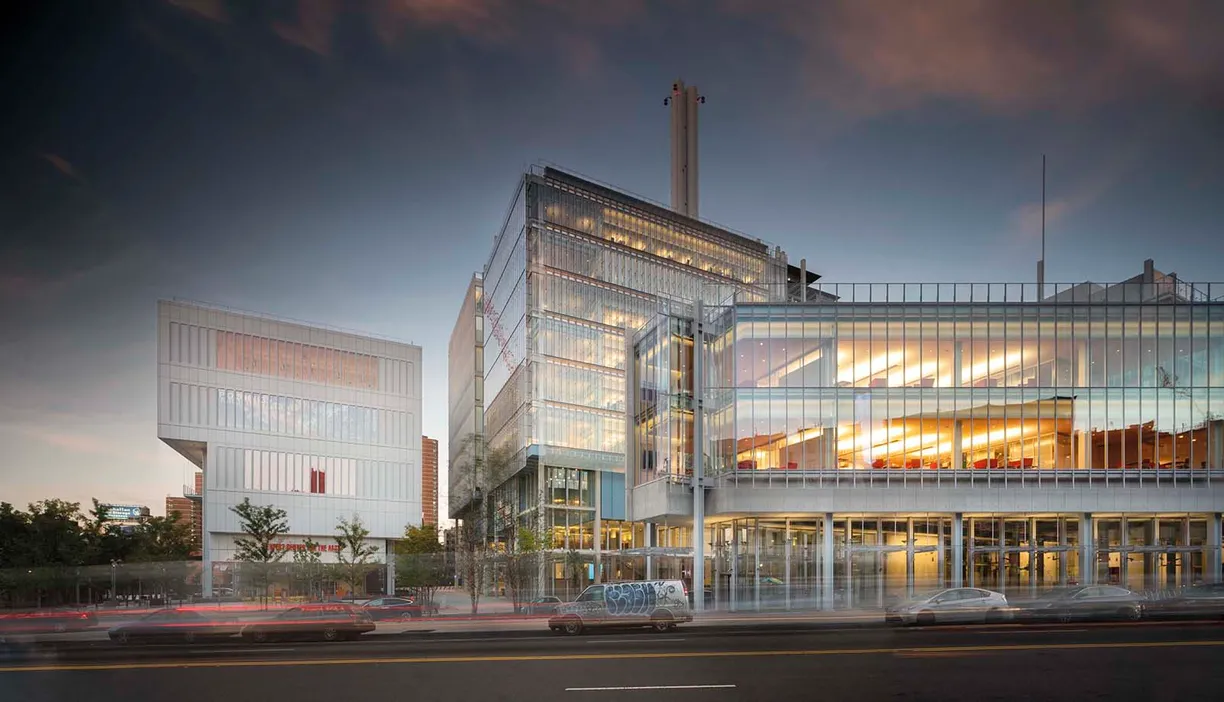
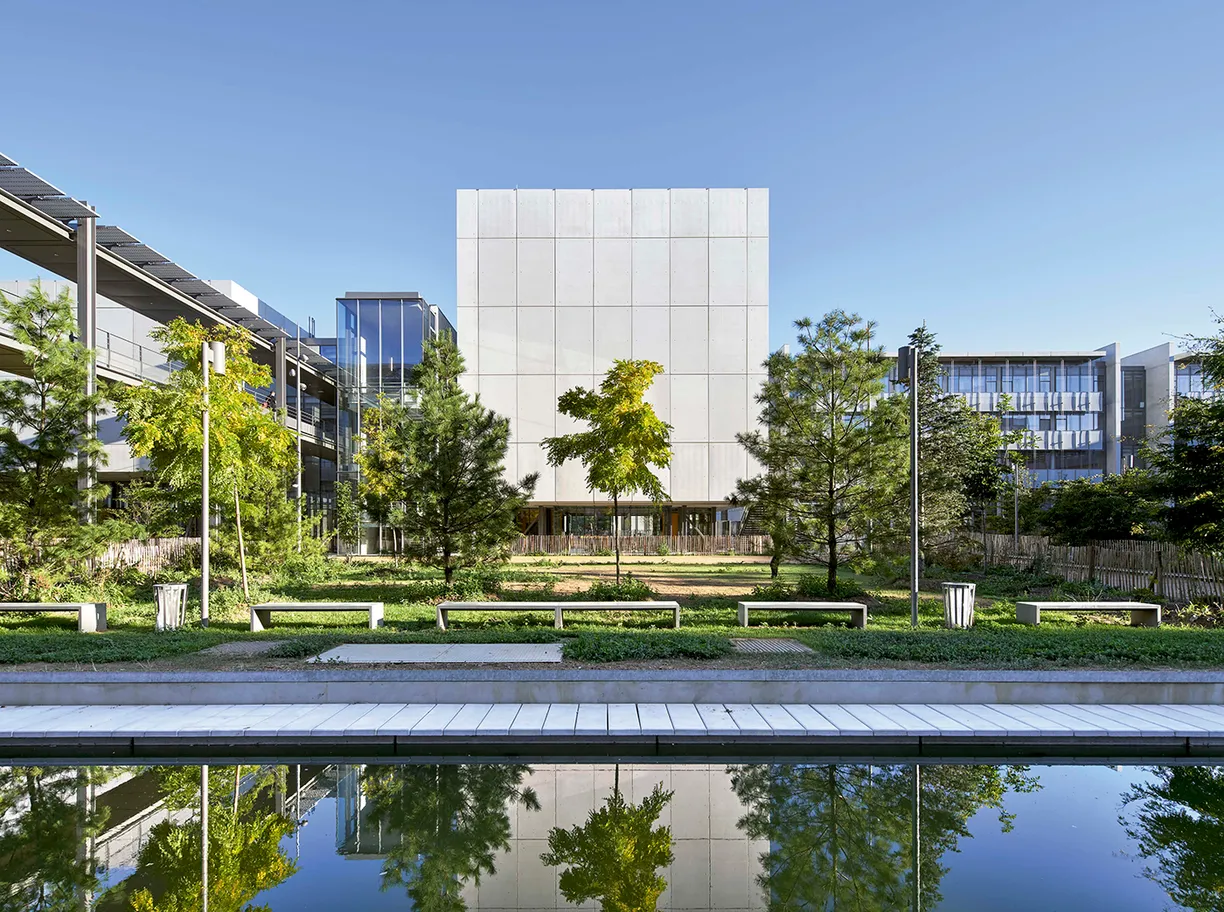
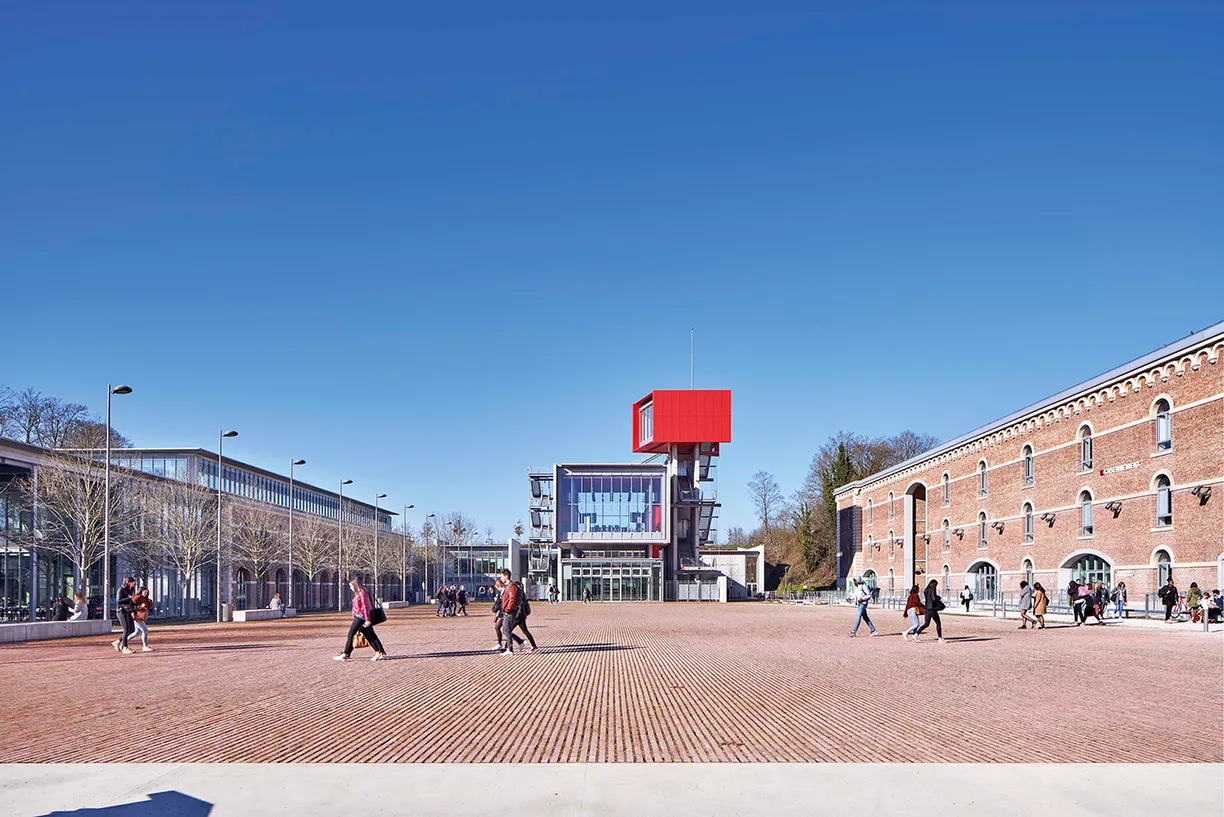
Tsientang Campus
Tsientang Campus will be situated on a 475,000 m² plot in southwest Hangzhou. RPBW has been commissioned to lead The New Campus design that is set amidst the lush, hilly landscape on the northern bank of the Tsientang River. The location is home to the historic Tsientang Ruins, which are endowed with an exceptionally rich cultural heritage, making it a fitting home for the university.
The University will be centered on cutting-edge research with a mission to expand the boundaries of science for human health. For science, it aims to create knowledge from “zero-to-one” encompassing a holistic approach to research. Conversely, technology seeks to transform academic ideals into real-world applications. The university wants to become a new type of university in China that pushes the limits of human innovation to shape the future. It will be rooted in Chinese values and have a global reach.
The program is thoughtfully organized to support both advanced research and a vibrant academic community. The campus is divided into two plots: an academic plot and a residential plot.
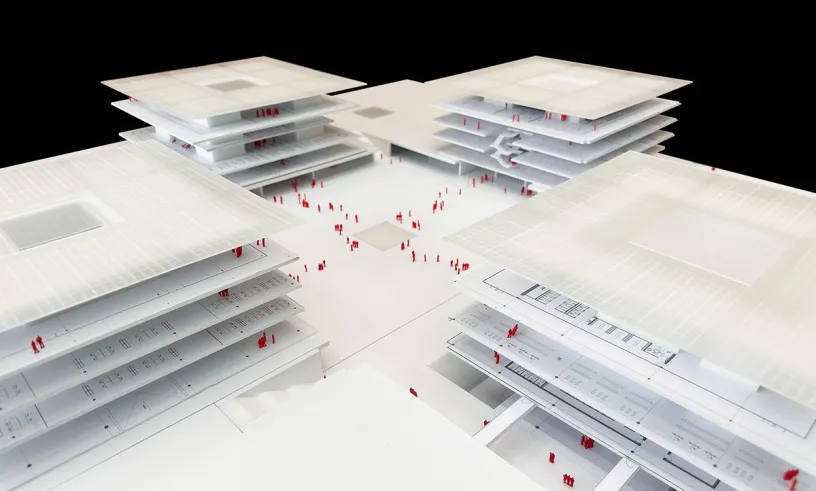
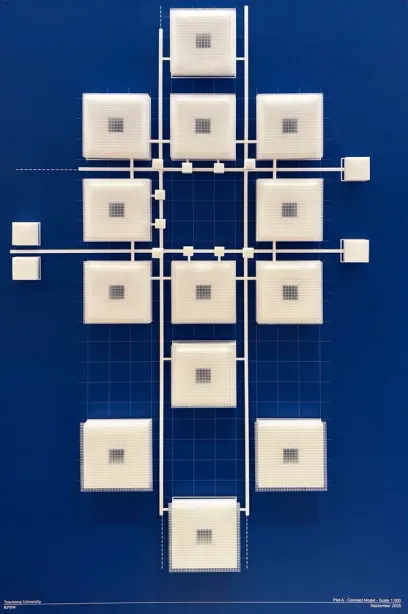
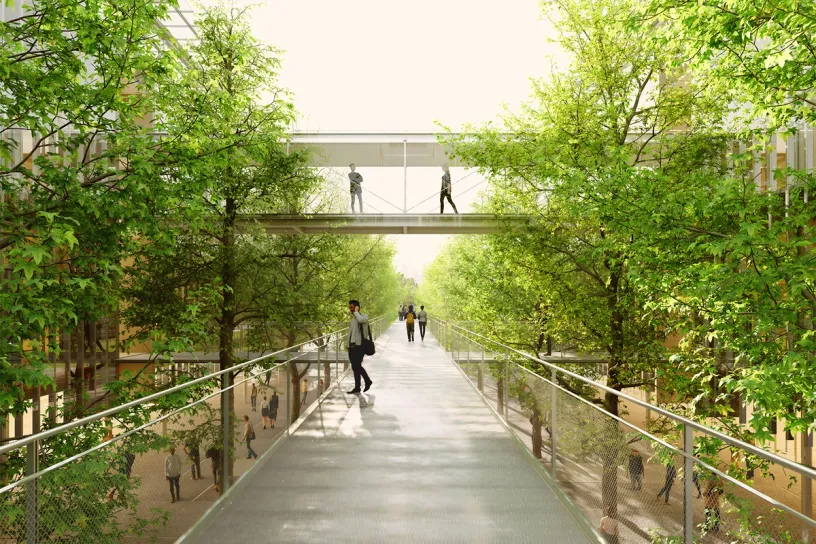
The academic plot forms the intellectual core of the campus and houses ten buildings dedicated to laboratories and offices, with exhibition spaces distributed throughout the ground floor. At the heart of this core is the academic commons which shapes and creates the turbine of the campus. It is the social and spatial centerpiece that connects the student and faculty bodies with each other.
Cultural and public spaces are positioned along the urban edge around the public piazza. These include three additional buildings - the Auditorium, Sports Center, and Library - which anchor the project to the surrounding neighborhood and opens to the community.
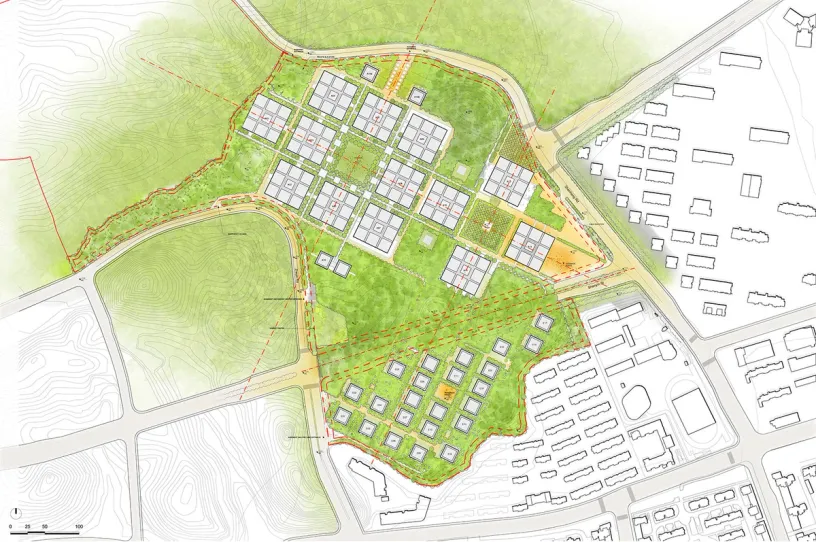
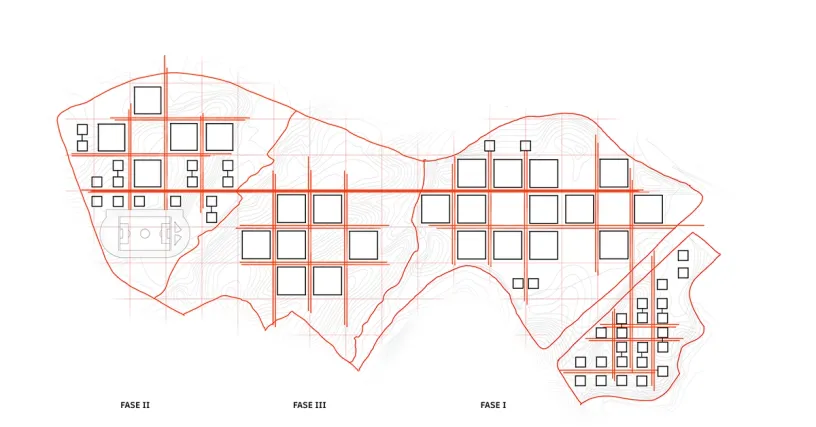
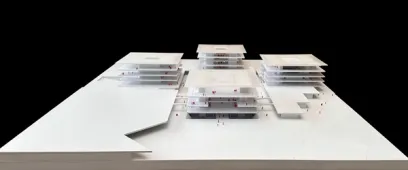
The residential plot provides a quiet and comfortable environment for its inhabitants. The 23 buildings are integrated within the landscape and offer proximity to the university while maintaining a sense of privacy and comfort.
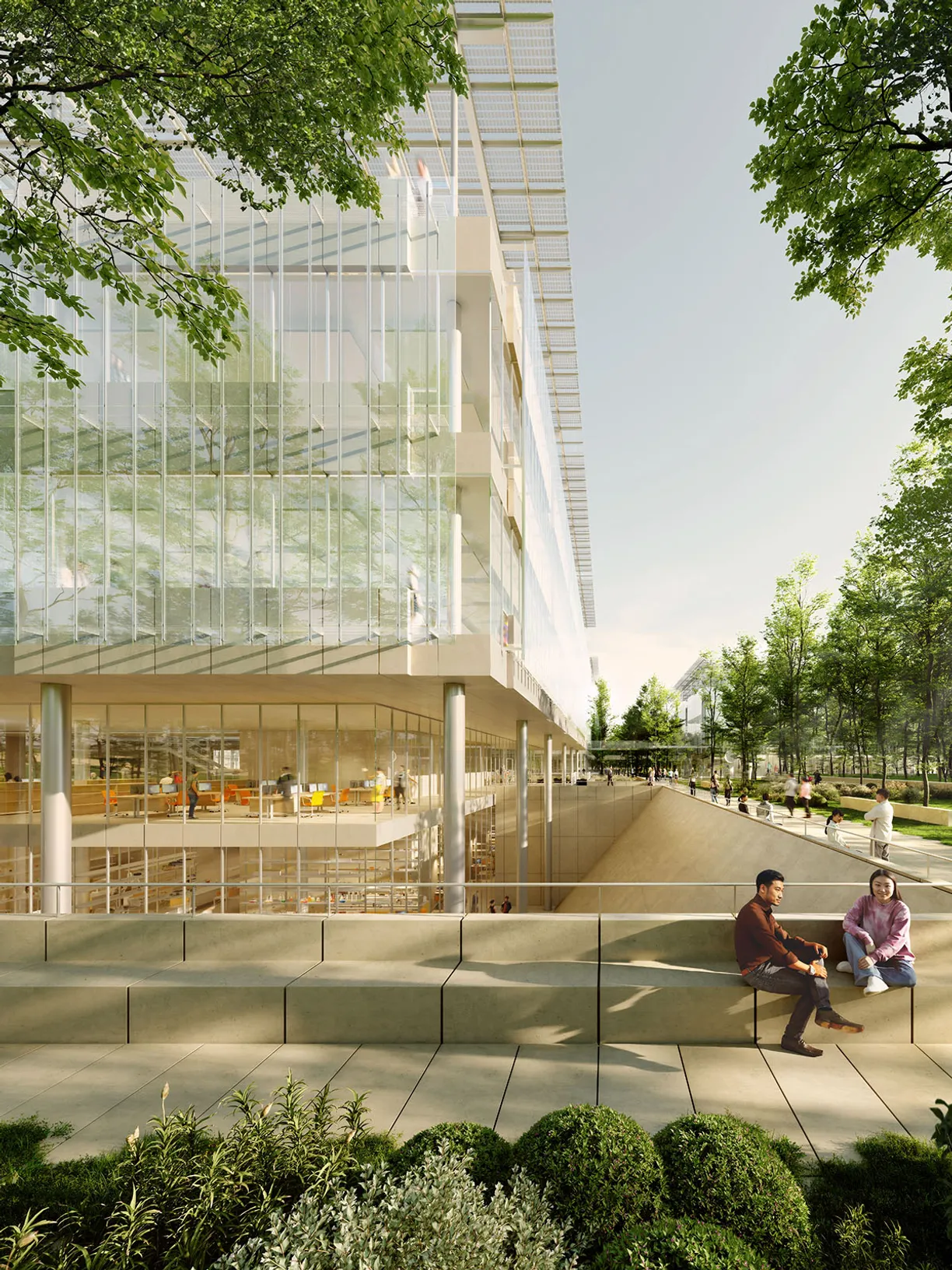
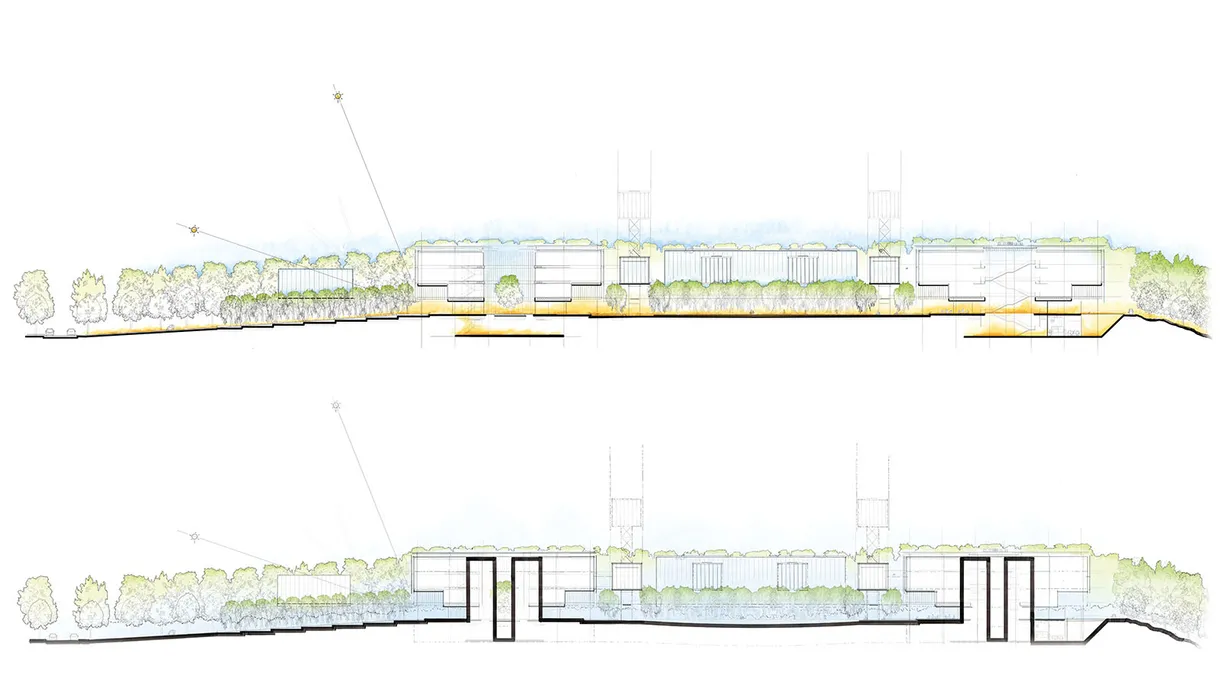
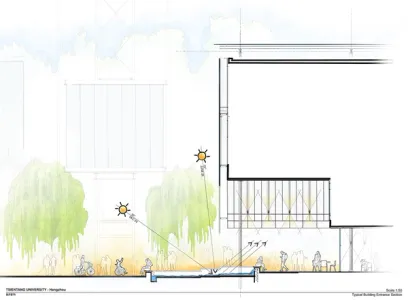
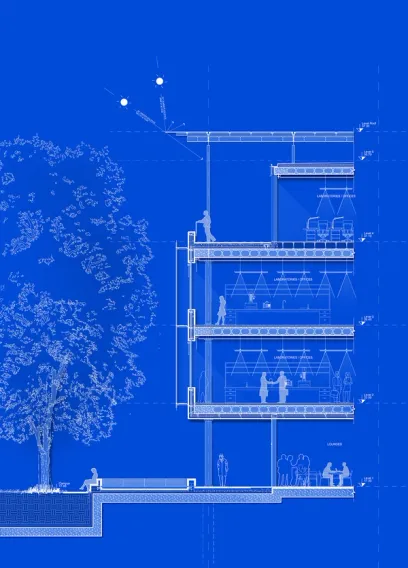
The architecture adopts a sensitive approach that celebrates and respects the site’s natural features. Buildings are limited to 20 meters in height, to ensure they fall below the forest canopy height. The design emphasizes transparency and permeability, allowing natural light, views, and movement to flow freely between spaces. Additionally, the buildings minimize their built footprint by elevating and recessing the ground floors to allow the volumes to seemingly fly among the forest.
The campus is envisioned as a forward-looking, sustainable complex nestled within a forest. Each building will be covered with a photovoltaic roof to create clean energy. A centralized energy center allows the university to be more efficient while improving reliability and resiliency.
Project Details
Status
Client
Tsientang Institute for Advanced Study
Design
Renzo Piano Building Workshop, architects
in collaboration with the Architecture Design & Research Institute of Zhejiang University (Hangzhou)
Design Team
L.Priano, M. Giannini, K.Joyce, S.Lafranconi (partner and associates in charge)