600 W. 125th Street
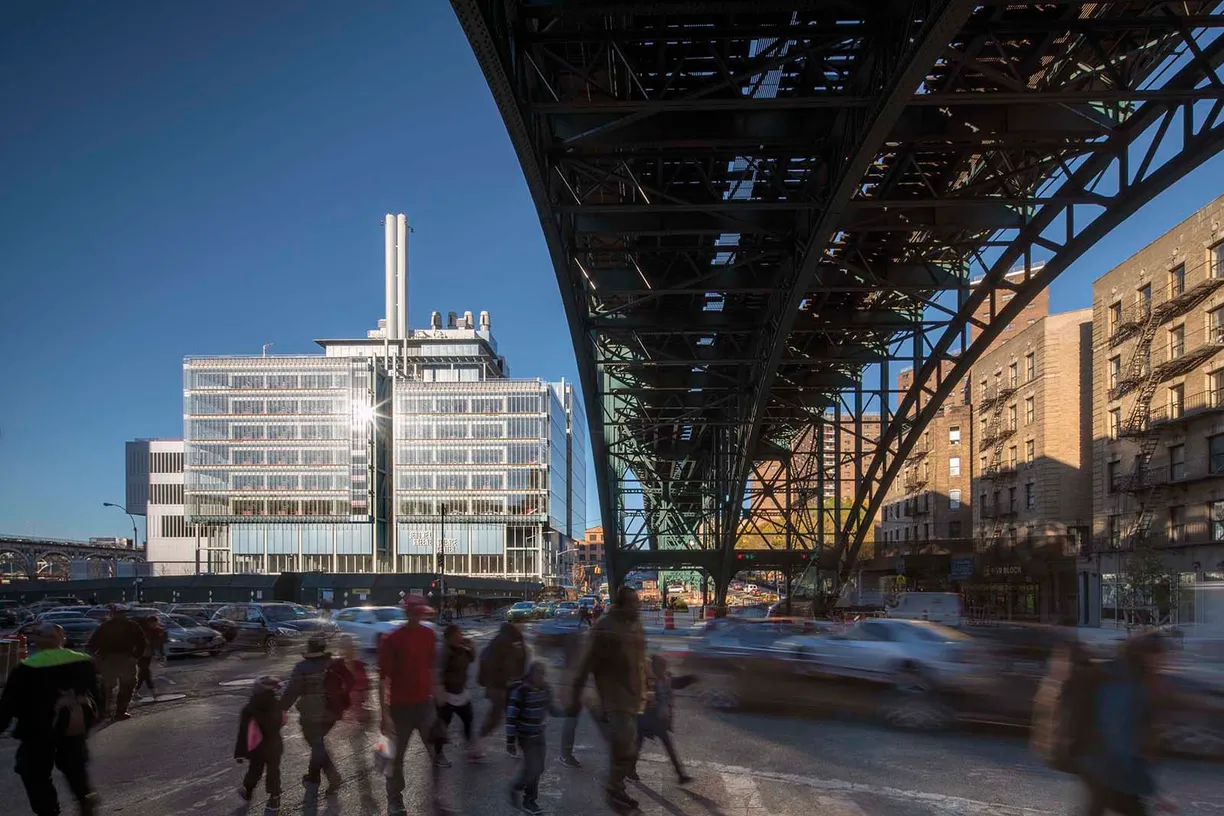
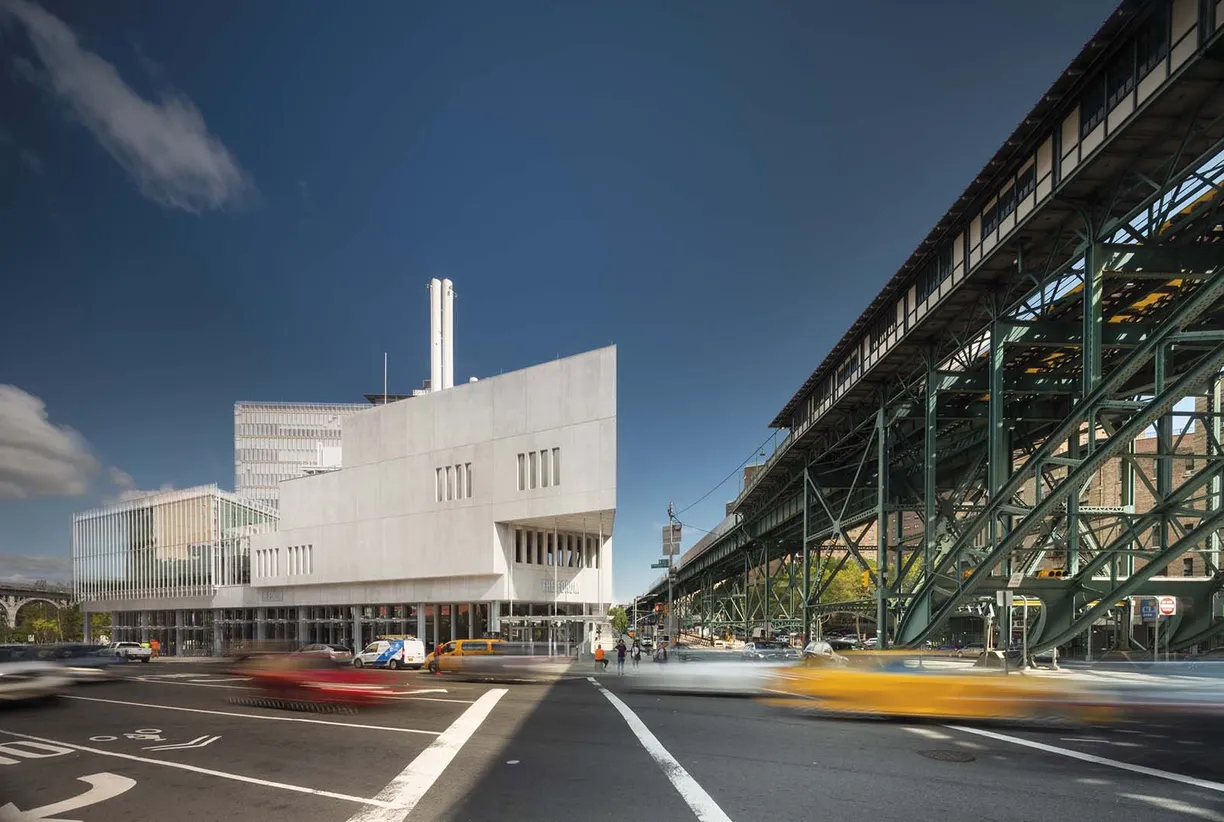
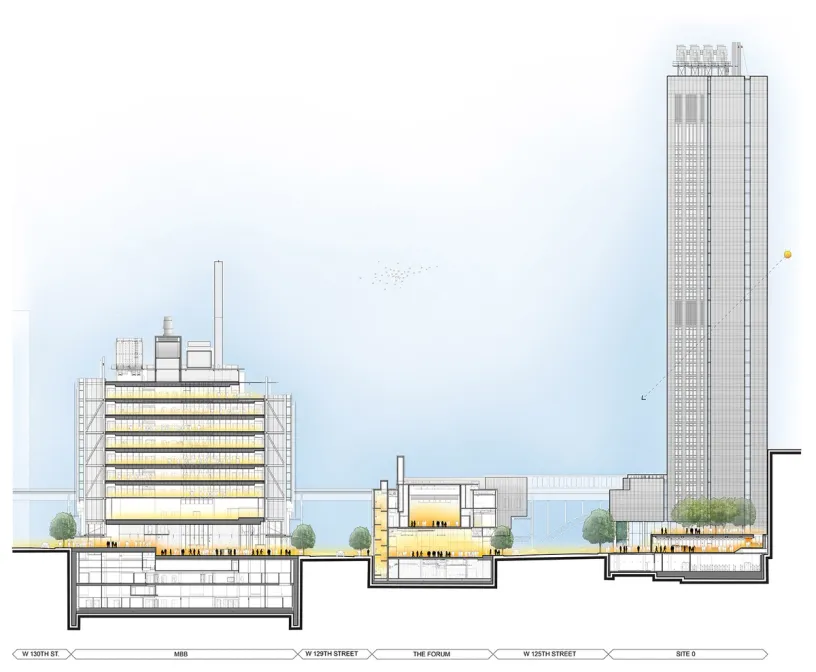
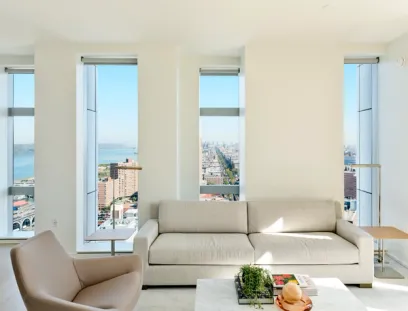
600 West 125th Street is the latest addition to Columbia University’s Manhattanville Campus, continuing the vision of a 21st-century campus integrated into New York City. The project extends the campus’s principles of lightness, transparency, and contextual sensitivity while introducing graduate and faculty housing, adding daily life and activity. Rising near Broadway, the 34-story tower becomes a visible marker of Manhattanville, connecting the new campus with the historic Morningside campus.
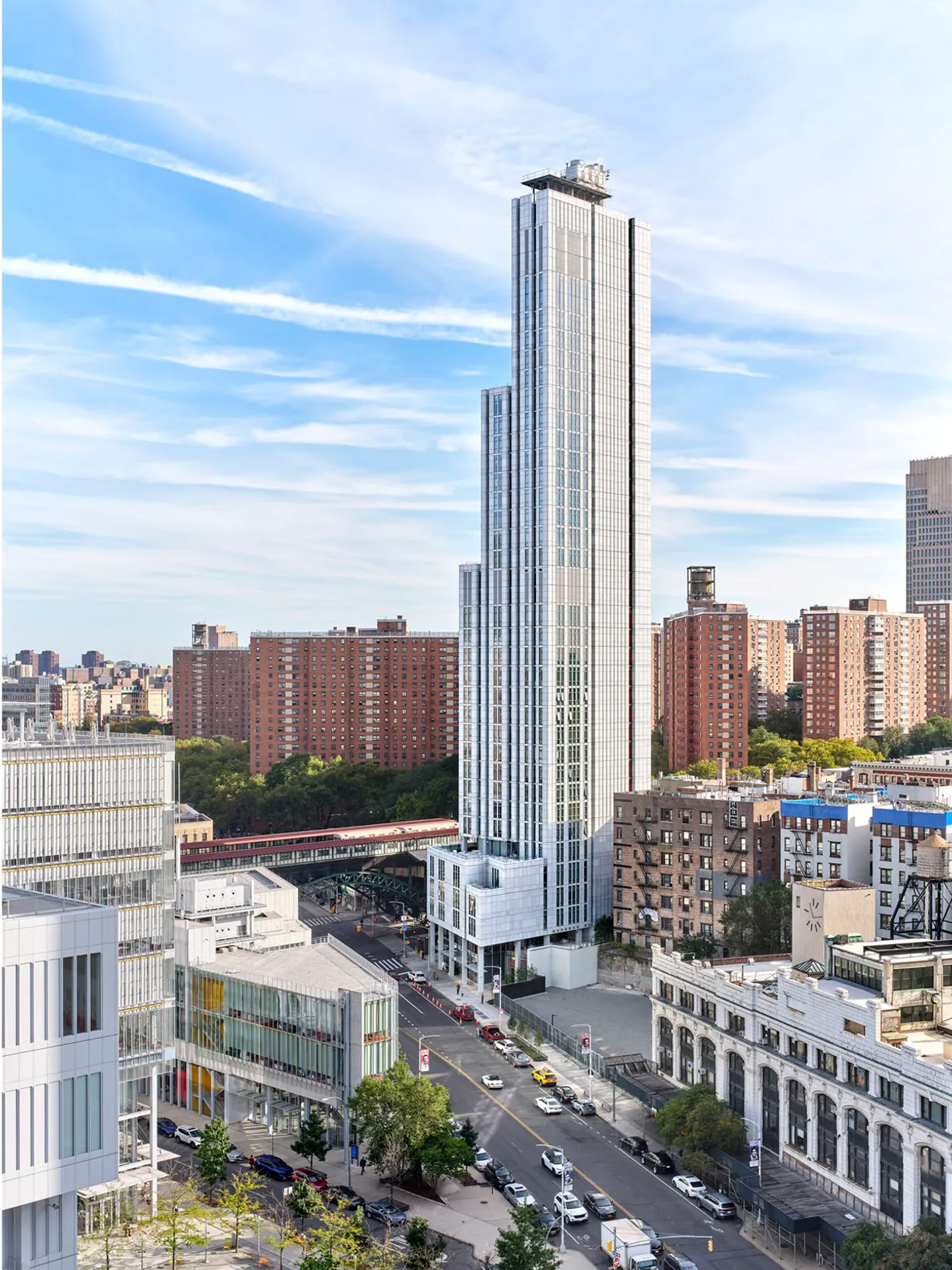
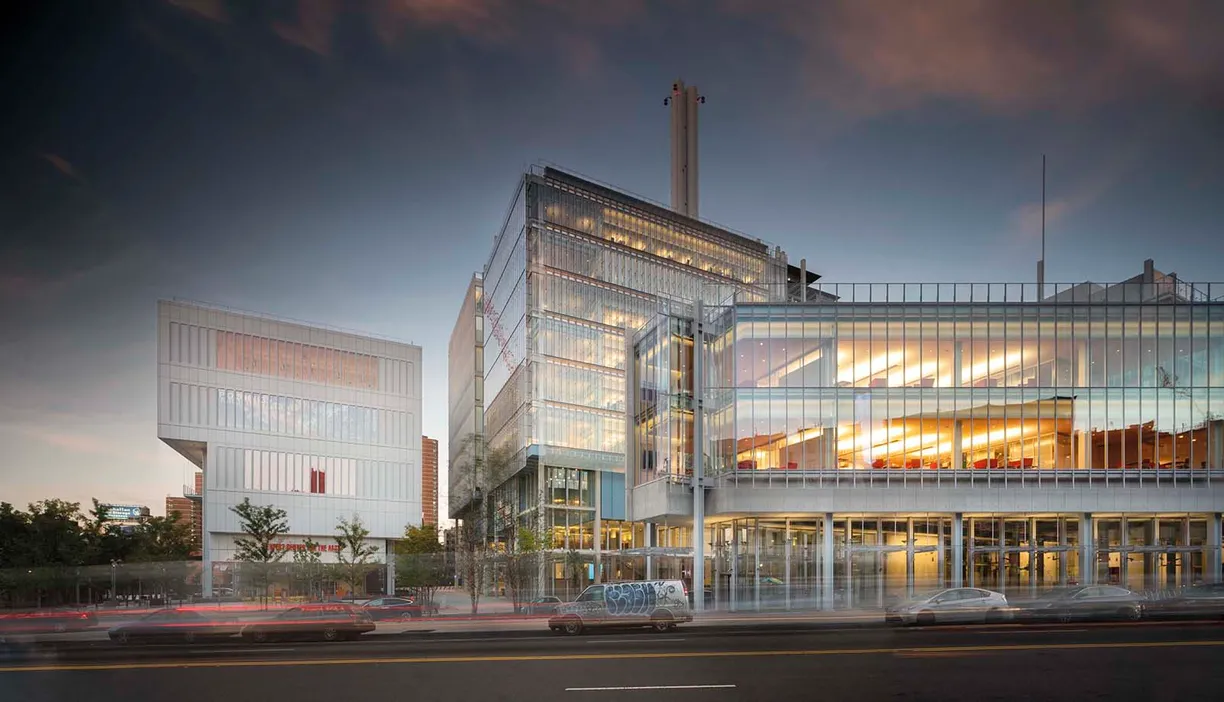
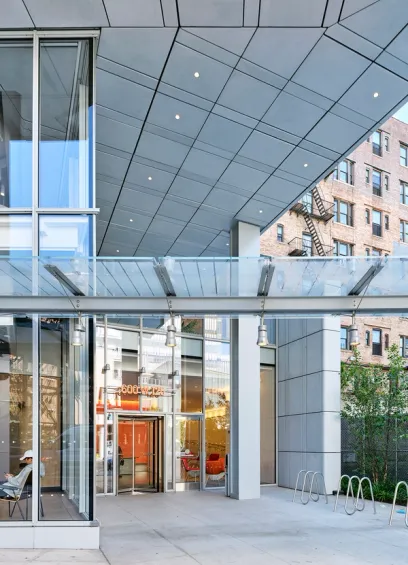
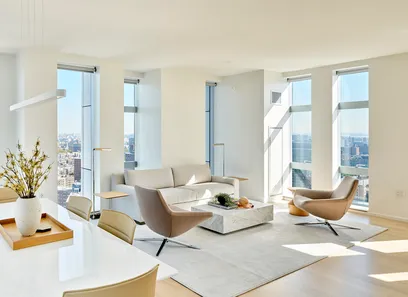
The building contains 142 apartments over approximately 184,000 sq. ft. and reaches around 400 feet. Its massing responds to the surrounding neighborhood, allowing light and air to flow between the building and adjacent streets. Elevated on slender columns, the base appears to float above the Urban Layer, reinforcing permeability at street level. A five-story podium defines the street wall and echoes the Forum across Broadway, creating a southeastern gateway to the campus. Above, the tower steps back and fragments to reduce shadows and visual impact, while vertical notches punctuate the façades and the top forms a rhythmic composition with building systems.
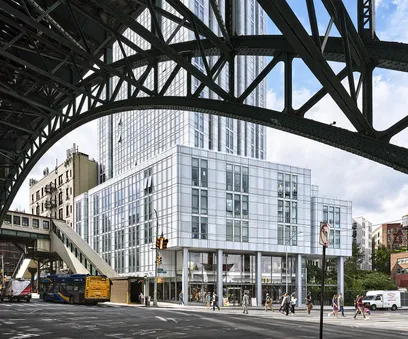
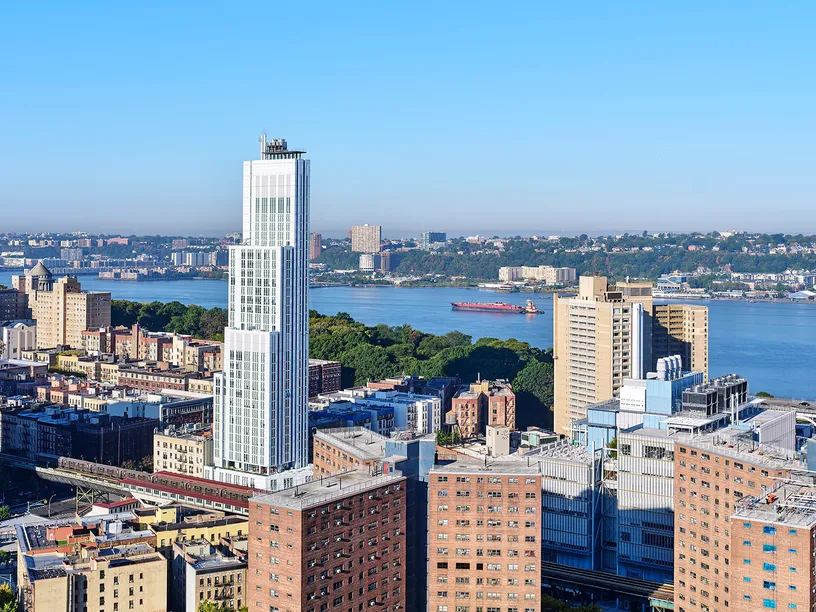
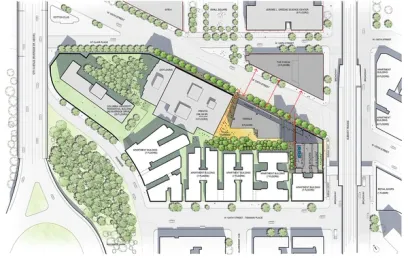
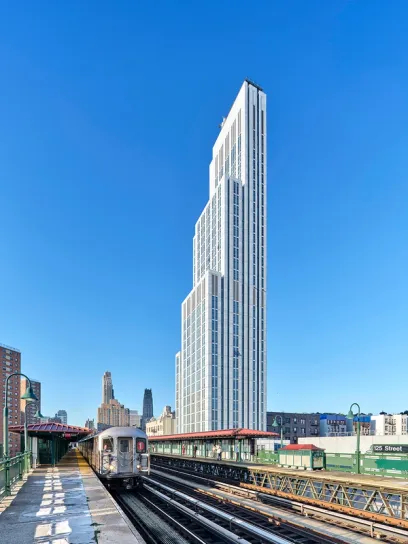
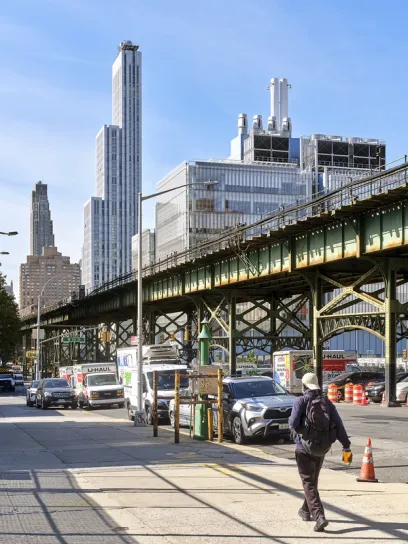
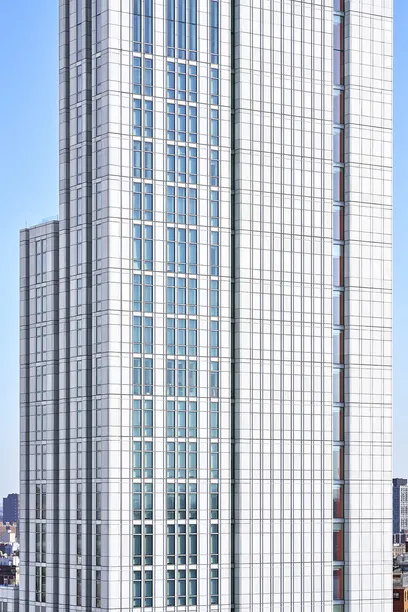
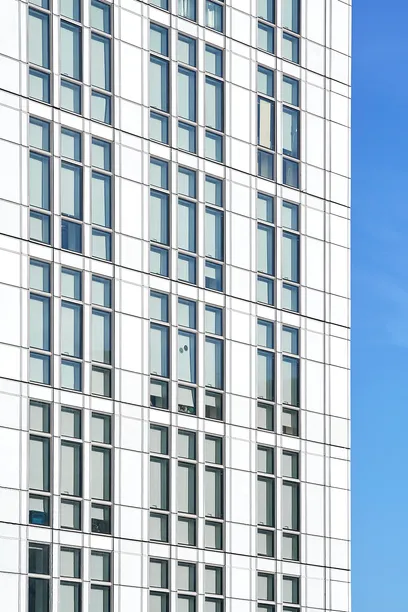
The façade is composed of blue-grey pigmented GFRC panels polished to a reflective finish, creating a luminous, sky-reflecting skin. Fragmented volumes are divided into smaller bays with operable windows, relating to human scale. Curved corners, soffits, and parapets soften the geometry, and vertical and horizontal ribs cast subtle shadows across the elevations. The polishing process reveals the concrete’s granular texture, adding tactile interest up close.
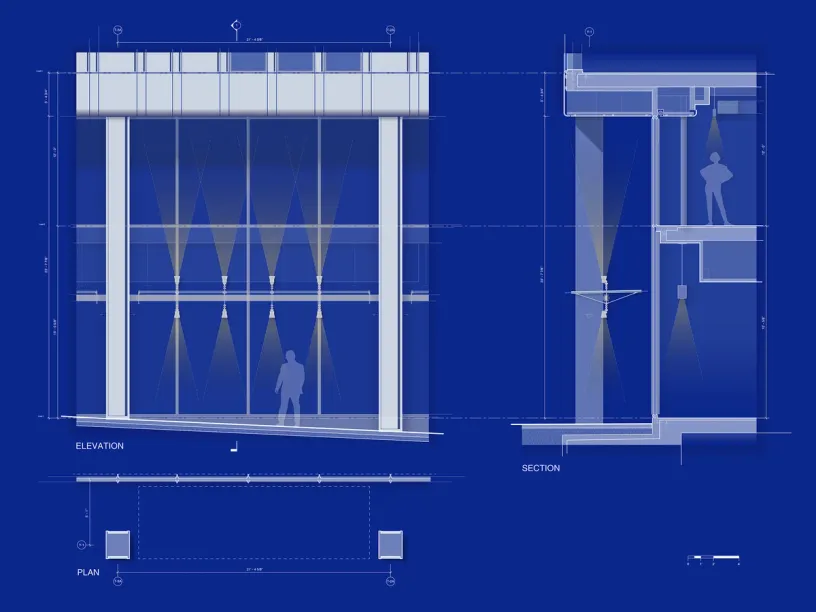
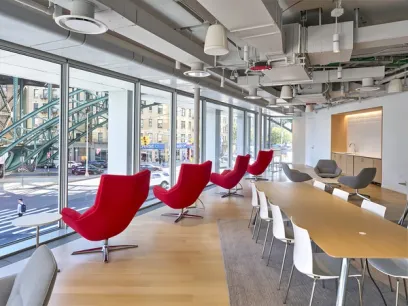
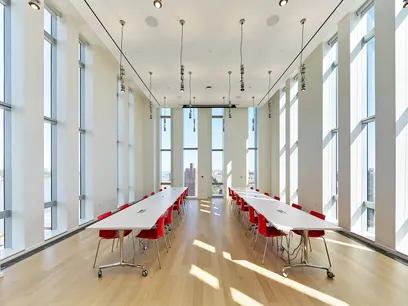
At street level, the transparent base incorporates the former McDonald’s at the corner of Broadway and 125th Street. The residential entrance to the west is highlighted by vibrant orange accents that guide residents through the building. This orange continues through lobbies, amenity spaces, and stairwells, creating visual continuity and a warm glow at night. Amenities on Levels 2 and 6 include lounges, a fitness center, a game room, a children’s playroom, laundry, and outdoor terraces with greenery and daylight. At the top, the 33rd-floor library provides a double-height common space with panoramic views, the tallest in Columbia’s residential buildings.
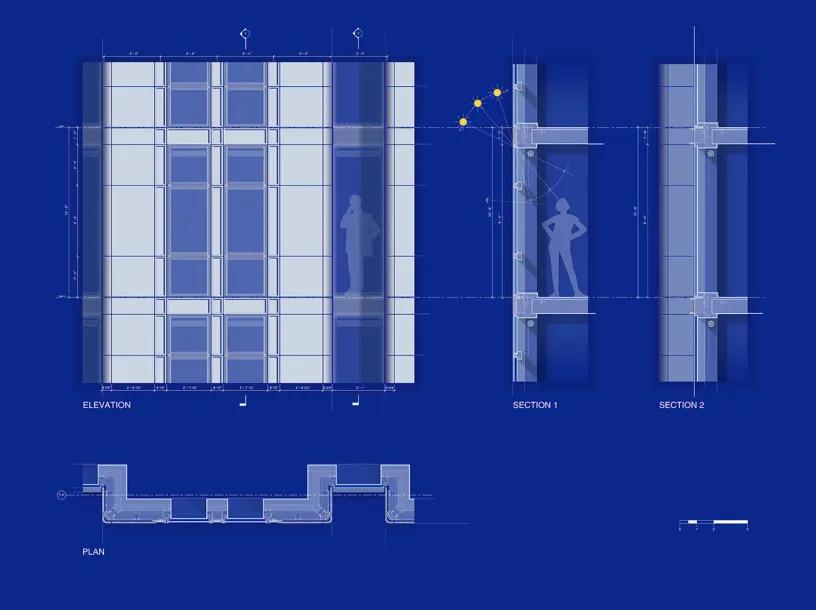
The project continues the campus’s sustainability goals, targeting LEED v4.0 Gold and Fitwel 2-star certification. Strategies include a high-performance façade, efficient building systems, limited gas usage, vegetated roofs, stormwater management, and enhanced Clean Construction practices.
With 600 West 125th Street, Manhattanville Campus principles of lightness, transparency, contextual sensitivity, and sustainability are combined with a new vitality of residential life. The building not only marks the campus skyline but also creates a place where faculty and graduate students are connected to their academic purpose and the surrounding urban environment.
Project Details
Status
Client
Columbia University
Design
Renzo Piano Building Workshop
in collaboration with CetraRuddy Architecture (New York)
Design Team
A.Chaaya, C.Anderson (partner and associate in charge), J.Wadge with H.Nakatani, T.Oyama and A.Bajpai, X.Chen, C.Ghanem; I.Soulanges (BIM co-ordination); A.Bagatella, D.Tsagkaropoulos (CGI); O.Aubert, C.Colson, Y.Kyrkos (models)
Consultants
LERA (structure); AKF (MEP); Thornton Tomasetti (façade); VDA (vertical transportation); Atelier Ten (sustainability); Arup (acoustics); Syska Hennessy (IT/Security/AV); Langan (civil); Mueser Rutledge (geotechnical); Tilloston Design (lighting); Kuhlmann Leavitt (signage); Elizabeth Kennedy (landscaping); CCI (building code/ADA); Gleeds (cost consultant)